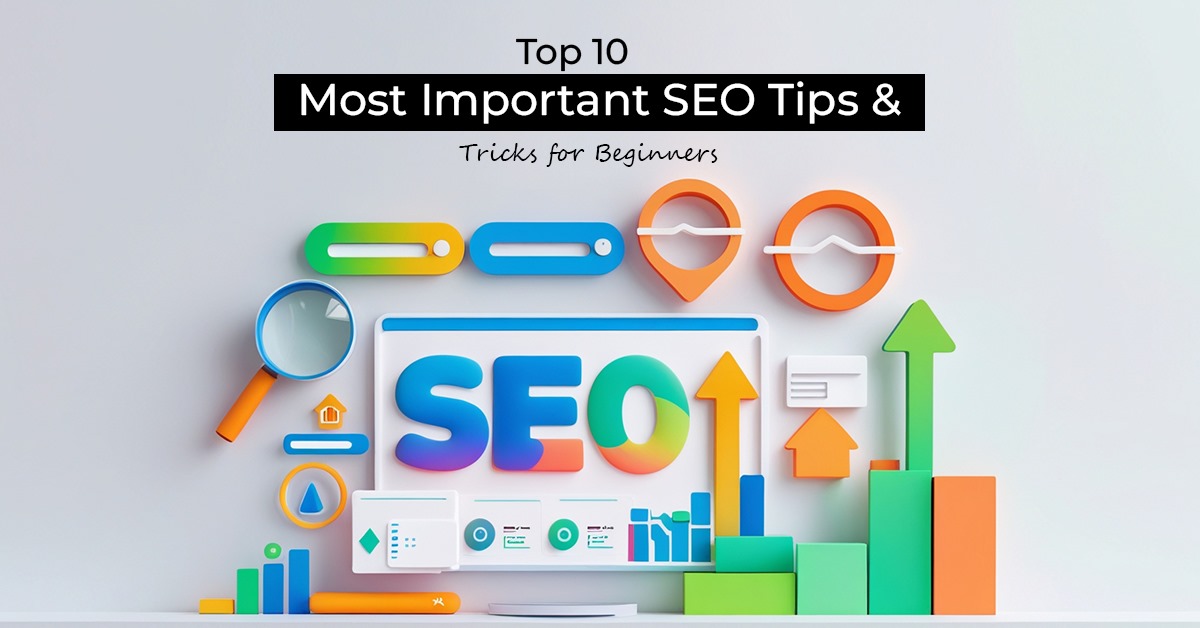
Search Engine Optimization (SEO) is one of the continuously growing spheres that is necessary to optimize websites and attract traffic. No matter how experienced you are, you can exponentially increase the rankings of your site on search engines such as Google by learning how to master SEO. In this blog, we will take an in-depth look at the top 10 SEO tips and tricks which every beginner must adhere to in order to get the best results
Introduction to SEO: Why Does It Matters?
Nowadays in the era of digitalization, it is not sufficient to merely have a site. People have to find it, and that is where SEO comes in. The term Search Engine Optimization describes the process of helping your site to be listed higher on search engines. This is aimed at ensuring that your site gets a first page ranking on the search engine whenever a user searches using appropriate keywords. There are a good number of websites on the internet that follow a particular SEO strategy in order to make a mark in the ocean.
In this guide, we are going to share some of the best SEO tips and tricks that can guide a beginner into gaining more knowledge on what it entails to make a site rank higher. But enough about that already then, on with it!
1. Conduct an SEO Audit
In the event of planning to optimize your own web site you should analyze how it is performing before you jump in. SEO audit assists in the process of finding weaknesses, opportunities, as well as areas of improvement. It puts before you a clear picture of the position of your site in regards to SEO.
Key Points of an SEO Audit:
- Test the speed of a website: Slow website will drag your rankings negatively. Ensure that your site is quick (most notably on mobile).
- Mobile responsiveness: Make your site be mobile friendly since Google has made mobile optimization to be a ranking signal.
- Site organization: Take a look at your site organization so that you can assure you have a user-friendly and search-engine-friendly site.
- On-page SEO: Conduct a review of the existing situation with the title tags, meta description and headlines.
So tools like Google Search Console, Semrush and Ahrefs should be your friend when it comes to a thorough SEO audit and nail down what needs fixing. After you have the audit report you have a plan of action for your SEO improvement..
2. Target the Right Keywords
Any SEO consists of keywords. When you use the right keywords you have very high possibilities of coming out on top at Google. Keywords refer to words that customers enter in a search engine in a bid to find information, products or services..
How to Choose the Right Keywords:
- Research: Use the Google Keyword Planner, Ahrefs or SEMrush to find keywords from your niche.
- Search Intent: After that, know what you are looking for; that is the intent behind keywords. If people are searching for information, products or services?
- Long-tail keywords: A more focused phrase that has less competition and can often result in higher conversions.
When you focus on a high intent keyword and use it as the visible keyword in your site then it will rank you and drive better targeted traffic.
3. Analyze the SERPs
Having obtained your keywords, you must then move on to the step of Search Engine Results Page Analysis (SERPs) analysis. If you want to find out what pages belong to the ranking of your desired keywords, and which characteristics they possess which make them successful, SERPs give you the necessary information. Through examining the SERPs, you would have an idea of the content and the strategies that the highest ranking pages are implementing.
Things to Analyze in SERPs:
- Content format: What type of content is the top ranking results one: blog posts, products, videos or infographics?
- Featured snippets: Search whether the featured snippet displays when it includes your target keyword as this can result in extra traffic.
- Competitor strategy: What are your competitors doing to which you can be better?
Knowing what customers are interested in on the first page of search results, you will be able to make your materials fill the gaps and offer more value than the competitors do.
4. Target Long-tail Keywords
Long-tail keywords are more direct, keyword terms that have more words. Although they are likely to be of low search volume, they are likely to provide better conversion. This is due to the fact, they seek those users who are nearer in the decision process.
Why Target Long-tail Keywords?
- Reduced competition: Long-tail keywords get fewer competitors, so ranking on such keywords is easier.
- Conversion rates: There are higher conversion rates because they are more specific hence the likelihood of the user being ready to act is high when they use long-tail keywords.
For example, instead of focusing on the general keyword of simply using the keyword of “SEO tips,” you can directly focus on using the keyword of, say, “SEO tips as a beginner in 2025.” The narrower the keyword the more you have a chance of satisfying the searcher with what he/she wants..
5. Develop Comprehensive Content
Google rewards deep and quality content that completely responds to a user’s question. When you have more stuff, it is much better in terms of ranking in that it is regarded as more of an authority when it is over 1,500 words or more.
How to Create Comprehensive Content:
- Answer questions: Answer the standard questions that revolve around your keyword.
- Exploit several forms of media: Add photos, videos, infographics, and diagrams to make your content more interesting.
- Touch the subject in every aspect: Do not take the subject ahead on the surface; dig deep into the topic and give meaningful information.
Lengthier content means more opportunities to get your page shared and linked and therefore ranks higher by Google lessening your dependence on a specific social media channel being successful, resulting in more organic visitors.
6. Create E-E-A-T Content
Experience, Expertise, Authoritativeness and Trustworthiness is abbreviated as E-E-A-T. Google yields to these considerations to judge the quality of your content and decide its relevance and reliability.
Why E-E-A-T Matters:
- Trust factor: Google seeks to make sure that the information that it ranks is accurate, trusty and established by credible sources of information.
- User experience: High quality content that responds to the needs of the user will enhance an authoritative nature of your site.
To make it better in terms of E-E-A-T, make sure that your posts are made by people whom you trust in your area of operation, and still be ready to support your data with credible sources. Also, securing your site (HTTPS) and ensuring that it is friendly to navigate will enhance the level of trustworthiness.
7. Integrate LSI Keywords
LSI ( Latent Semantic Indexing ) keywords are terms that are associated with your core keyword. By inserting these related keywords into your content, Google will be able to have a sense of your content context and hence boost rankings.
How to Use LSI Keywords:
- Google your target keyword: This only takes a few seconds to see what the SERPs have and below their results is the related searches which give you LSI keywords.
- Variations in use: Variation of use used rather than duplication of the keywords, using the related words and synonyms..
- Increase relevance of content: LSI keys assist in raising the practicality of your content and increase its relevancy to the queries that people are searching on.
By naturally integrating LSI keywords into the content, you assist Google in understanding what that particular page is about and that can make it more visible to the search engine.
8. Implement On-Page SEO
On-page optimization means of improving an isolated web page with the aim to rank better and gain more relevant visits. This will comprise of optimising the titles, meta descriptions, header tags and the URL structures.
Key On-Page SEO Factors:
- Title tags: Ensure that your title tag is unique and has your focus keyword and is less than 60 characters.
- Meta descriptions: Include your influencing meta description to greatness that will include your target keyword.
- Header tags (H1, H2, H3): Break up your content with the help of header tags to ensure that both users, and search engines will understand your text.
- Internal links: Linking to your own relevant pages within your web site will enhance the internal linking and make the page authoritative.
Optimizing these will enhance the user experience and its simplicity in being indexed by the search engines.
9. Build a Web of Internal Links
Internal links mean linking your own pages to one another. It aids the navigation of the websites, dispenses or allocates the page authority, and enhances the user experience in offering useful content recommendations.
Benefits of Internal Linking:
- It increases SEO: Linking to key pages on your site will help search engines to determine which of those pages are the most important.
- Maximises time spent on site: Internal links allow users to spend more time on your site by compelling them to view more of your content.
- Enhances crawlability: The internal links assist the search engine to navigate through the new content with enhanced ease.
Internal linking should be adopted as a strategic means of driving your users around your site and letting search engines know the priority of some pages.
10. Build Backlinks
Backlinks are the links that direct to your content that originated in other websites. They are among the major Google ranking factors. The greater number of high-quality backlinks there are the more authority your site has by Google.
How to Build Quality Backlinks:
- Guest blogging: Submit guest posts in well known websites in your industry that have high ranking and have a referral link back to your site.
- Content promotion: Make your content known by promoting it on social media and any other form of forums.
- Collaboration: Create partnerships with other companies or people with influence to receive back links of a high quality.
Try getting backlinks from high authority websites in your niche. Stay away from poor quality backlinks, as they don’t serve a good purpose in your SEO strategy.
Conclusion: Keep Monitoring Your SEO Results
SEO is a continuous process that needs to be frequently checked and adjusted. Then once you’ve got these SEO tips & tricks in place it is a good idea to keep an eye on how they’re performing by using tools such as Google Analytics and Google Search Console. This will allow you to see what is and isn’t working for you.
By implementing these straightforward steps and fine tuning your SEO strategy, you will be well along your way to get ready for search rankings and driving more organic targeted visitors to your site.